18,000 BTU Air Conditioner in Panama — Which One to Buy in 2025?
2:00 PM in Costa del Este. The afternoon sun drives straight into the floor-to-ceiling windows on the 8th floor. Humidity at 78%. The indoor thermometer reads 84°F (29°C). You've got a 320 square foot living room, two sofas, a TV running, five people waiting for the temperature to drop to something breathable. You switch on the 12,000 BTU split you installed three years ago. The compressor runs without stopping. By 3:30 PM, the room is still at 81°F (27°C).
That's not a brand problem or an age problem. It's a capacity problem. And the fix sits in exactly the segment most buyers overlook: 18,000 BTU.
The most common mistake is treating an 18,000 BTU unit as "for really large rooms" or "commercial use only." In Panama's climate, that capacity is the right answer for living rooms, open-plan dining areas, small offices, and commercial spaces between 270 and 410 square feet. If you're searching for the best air conditioner for a living room in Panama, this is probably where your search ends.
What Most People Believe — And Why They're Wrong
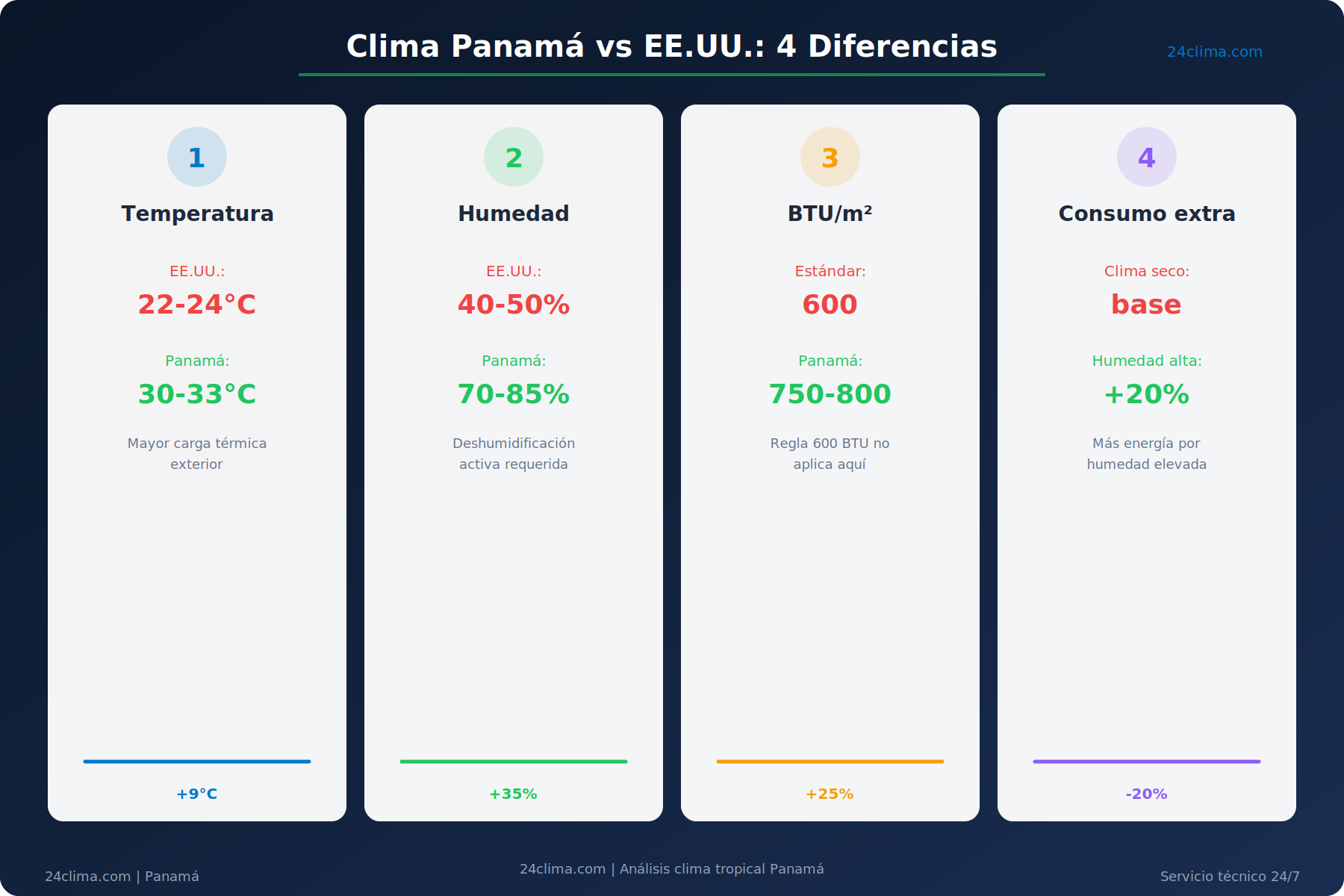
The 600 BTU per square meter rule (roughly 55 BTU per square foot) comes from the United States, where average outdoor temperatures run 72–75°F (22–24°C) and relative humidity sits between 40 and 50%. That formula doesn't translate to Panama.
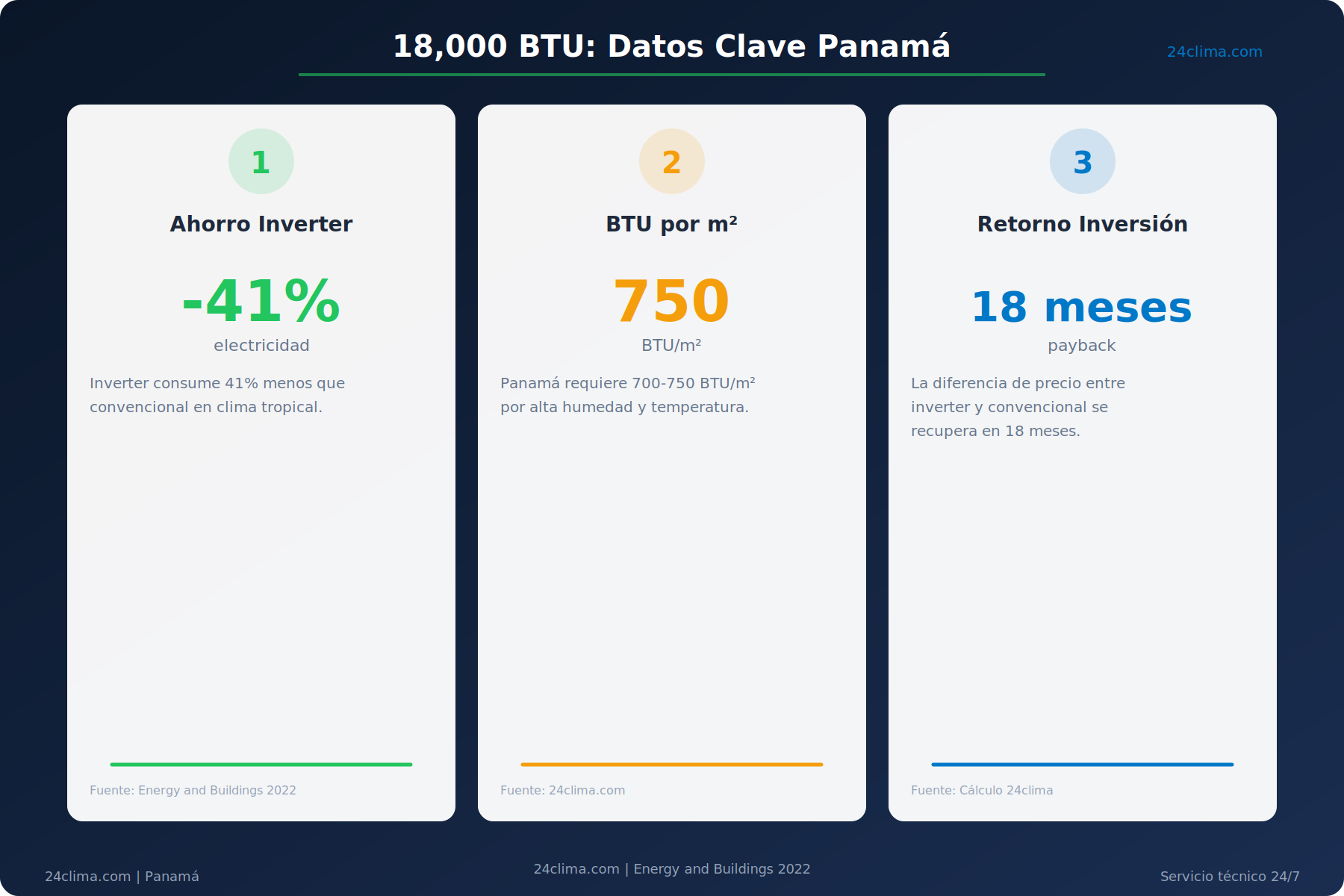
Here, outdoor temperatures hold at 86–91°F (30–33°C) for most of the year, with humidity swinging between 70 and 85%. Your AC unit isn't just cooling the air — it's actively dehumidifying it at the same time. A split working against that humidity load consumes 15 to 20% more energy and takes significantly longer to reach your target temperature. The practical result: you need between 700 and 750 BTU per square meter in spaces with moderate sun exposure, and up to 800 BTU with large windows or an exposed concrete roof on an upper floor.
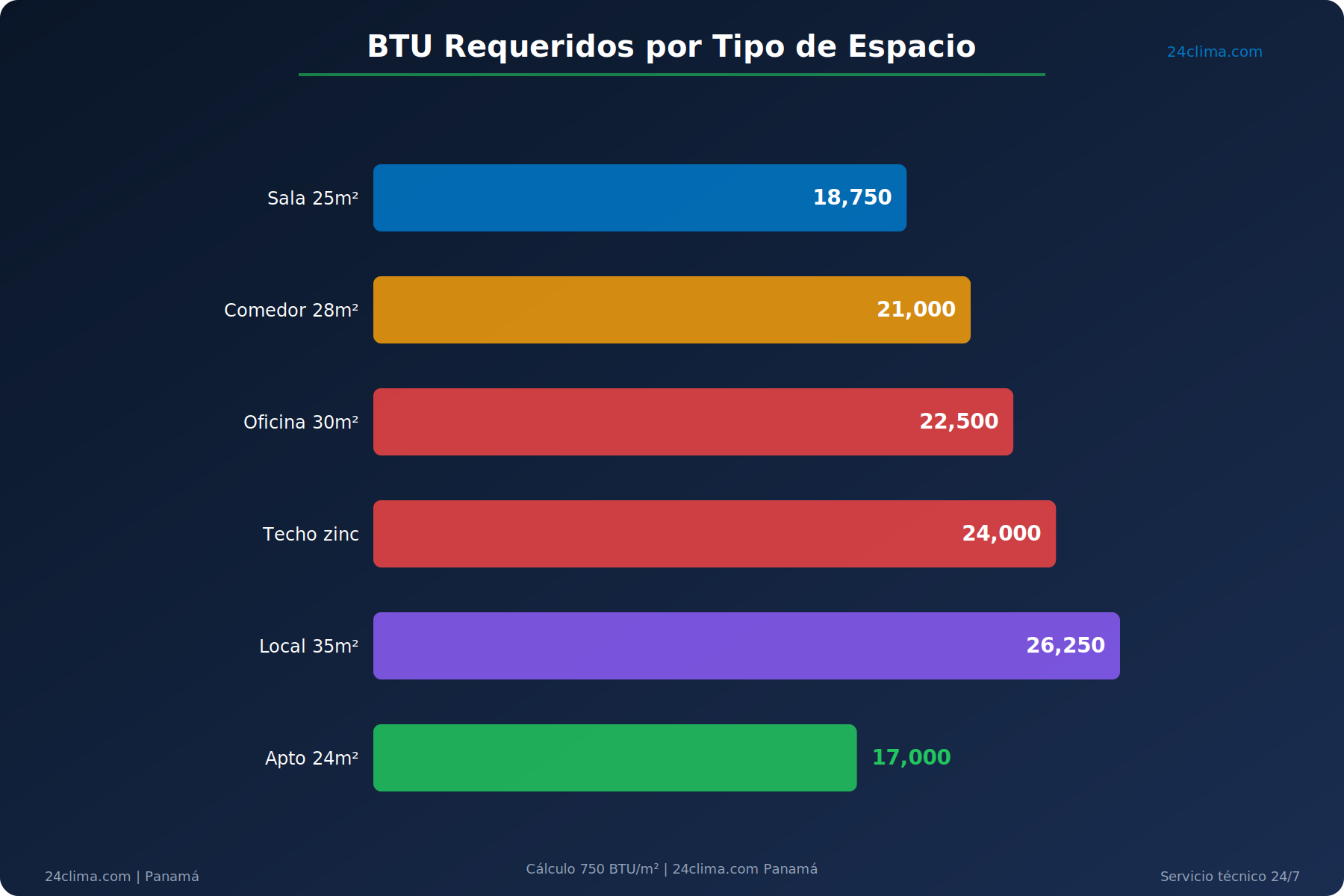
For a 270 square foot living room, that works out to between 18,750 and 20,000 BTU. An 18,000 BTU unit covers that range comfortably — especially in inverter versions, which can push above their nominal capacity during peak load.
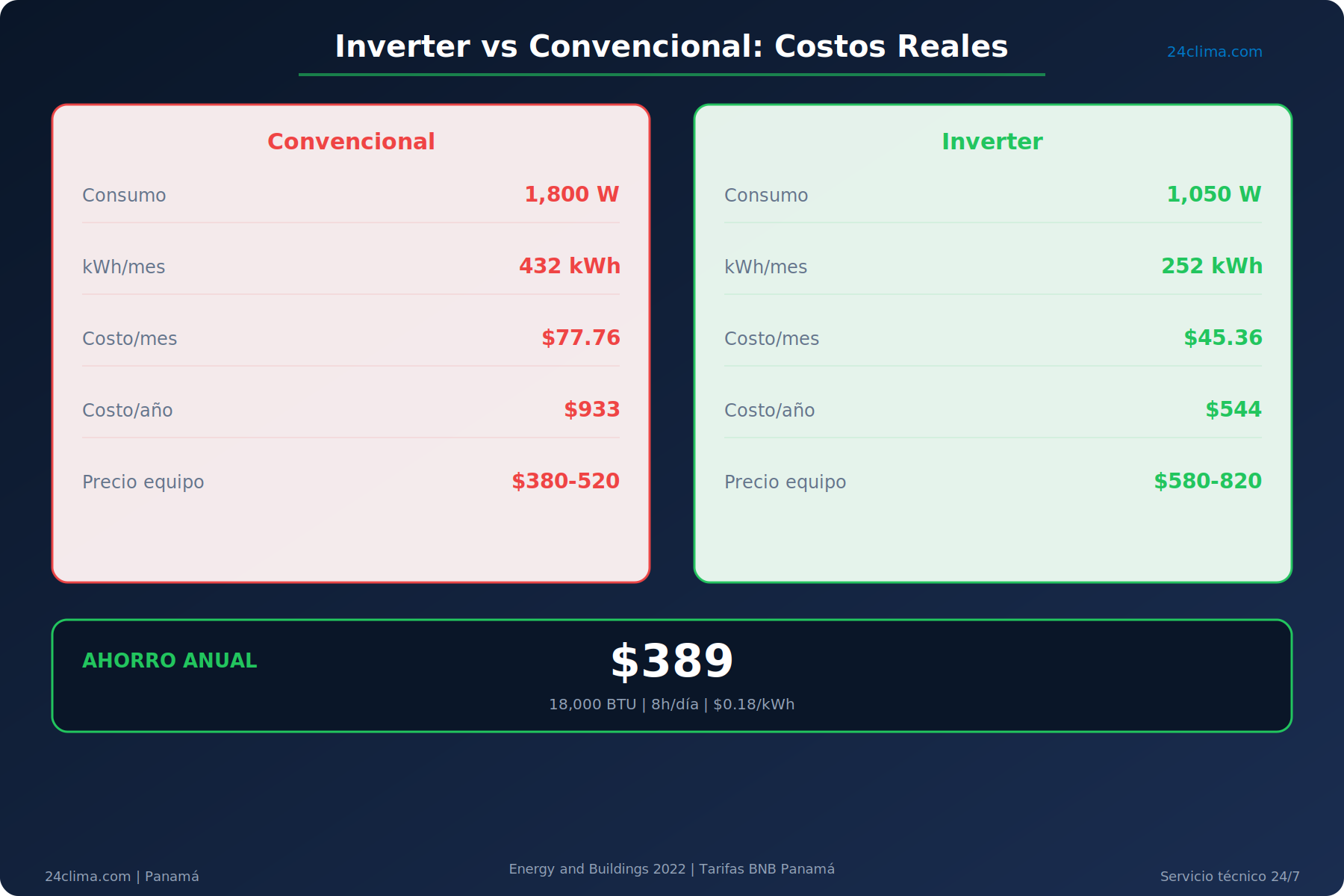
Many buyers also confuse purchase price with total cost. A conventional 18,000 BTU unit in Panama runs between $380 and $520. An inverter of the same capacity costs between $580 and $820. That $200 to $300 difference disappears in under 18 months once electricity bills enter the picture. The math is in the consumption section below.
Visit our guides and tips section for more capacity analysis and room-by-room comparisons.
What Size Space Does an 18,000 BTU Unit Actually Cover in Panama?
Coverage runs between 260 and 410 square feet depending on the thermal load of the space: sun orientation, number of occupants, electronics running, and ceiling height. In tropical conditions with humidity above 70%, that range shifts toward the lower end compared to temperate climates.
These are the situations where 18,000 BTU is the right call:
Apartment living rooms between 270 and 345 square feet, with 2 to 4 people and a TV or audio system running — especially with west- or south-facing windows.
Open-plan dining and kitchen areas between 240 and 300 square feet. The kitchen adds extra load from appliances, which raises effective cooling demand.
Office spaces for 4 to 6 people with computers, printers, and other equipment running 8 or more hours a day.
Small commercial spaces between 270 and 380 square feet: hair salons, doctor's offices, boutique shops, small cafés.
Main bedrooms in single-story houses with zinc or fiber cement roofs. Those materials absorb direct solar radiation and transfer heat straight into the living space — the real thermal load can run 25 to 30% higher than a well-insulated concrete-roof apartment.
If the space exceeds 380 square feet, has ceilings above 10 feet, or sees heavy commercial foot traffic, the next step up is a 24,000 BTU unit.
Inverter vs. Conventional — The Real Numbers in Panama
An 18,000 BTU inverter consumes between 38 and 44% less electricity than a conventional unit under similar operating conditions. A study published in Energy and Buildings (2022) found that inverter systems in tropical climates show 35–47% higher efficiency than on/off systems under daily usage cycles of 6 or more hours.
Here's the math for Panama.
A conventional 18,000 BTU unit draws approximately 1,800 W in continuous operation. At the BNB rate of $0.18 per kWh and 8 hours of daily use over 30 days:
1.8 kW × 8 hours × 30 days = 432 kWh per month 432 × $0.18 = $77.76 per month
An 18,000 BTU inverter with a SEER between 18 and 21 averages around 1,050 W in steady-state operation. Same conditions:
1.05 kW × 8 hours × 30 days = 252 kWh per month 252 × $0.18 = $45.36 per month
Monthly difference: $32.40. Over 12 months: $388.80. The inverter's higher upfront cost pays for itself in 9 to 15 months depending on the model and your usage habits.
Conventional units carry another hidden cost: the compressor cycles on and off constantly, generating startup spikes of up to 3 times the nominal power draw each time it kicks on. Those spikes don't just inflate your electricity bill — they accelerate wear on both the compressor and the circuit breaker. An inverter starts once, adjusts its speed continuously, and holds a stable temperature without the hard cycling.
Models Available in Panama — 2025 Comparison
Prices and models listed here reflect availability at Machetazo, DoIt Center, and Rodelag between January and April 2025. Prices do not include installation, which in Panama runs between $120 and $220 depending on job complexity and the distance between indoor and outdoor units.
Conventional 18,000 BTU models available in Panama:
— LG Artcool Conventional 18,000 BTU: $390 to $450. SEER 13. Good technical service network in Panama City. Available at Machetazo and Rodelag.
— Midea Conventional 18,000 BTU: $360 to $420. SEER 12. Competitive price point, replacement parts available locally. Available at DoIt Center.
— Samsung WindFree Conventional 18,000 BTU: $470 to $530. SEER 14. Micro-pore airflow distribution reduces direct cold drafts. Available at Rodelag.
Inverter 18,000 BTU models available in Panama:
— LG Dual Inverter 18,000 BTU (SEER 21): $620 to $720. One of the best-selling units in Panama. Dual rotary compressor, indoor noise level of 44 dB. Available at Machetazo, DoIt Center, and Rodelag.
— Daikin FTXB18AXVJU 18,000 BTU Inverter (SEER 19): $680 to $780. Uses R-32 refrigerant, which carries 68% lower global warming potential than R-410A and better thermodynamic efficiency. Daikin has certified service technicians in Panama.
— Midea U-Inverter 18,000 BTU (SEER 20): $580 to $650. Strong price-to-efficiency ratio. Available at DoIt Center and authorized distributors.
— Carrier Performance Series 18,000 BTU Inverter (SEER 18): $700 to $820. Carrier has the widest technical service network in Panama, which means shorter wait times for maintenance and warranty work. Available primarily through authorized distributors and Rodelag.
Installation note: an 18,000 BTU split requires 3/8" and 5/8" copper lines, a dedicated 20A breaker minimum, and a distance between units not exceeding 15 meters without additional refrigerant charge. Walls thicker than 10 inches or reinforced concrete can push installation costs to $250 or more.
For professional installation and correct refrigerant charging, check our installation service, or our maintenance service if the unit is already installed.
What to Check Before You Buy
An 18,000 BTU unit is a $500 to $1,000 investment including installation. These are the variables that determine which model makes sense for your specific situation:
SEER rating: The most important efficiency indicator. In Panama, where equipment runs almost year-round, a SEER of 18 or higher on an inverter is economically justified. Below SEER 15, the price premium over a conventional SEER 13 unit takes more than 3 years to recover.
Refrigerant: Models using R-32 are preferable to R-410A. R-32 carries 68% lower global warming potential, better thermodynamic efficiency, and is well-standardized among Panama's HVAC technicians.
Noise level: A well-designed inverter's indoor unit runs between 40 and 46 dB — roughly equivalent to a quiet conversation in your living room. Conventional units typically land between 48 and 55 dB, which you'll notice every night.
Technical service network: In Panama, brand service coverage matters more than it would in a larger market. LG, Carrier, and Daikin all have networks covering Panama City, Colón, and the main cities in the interior.
Compressor warranty: Inverter units from established brands offer 5 to 10 years of compressor coverage. Conventional units typically offer 1 to 3 years. The compressor is the most expensive component in the unit — replacement costs in Panama run between $180 and $350.
Frequently Asked Questions
What room size does an 18,000 BTU air conditioner cover in Panama?
Between 260 and 410 square feet, with actual coverage depending on the thermal load of the space. For a standard apartment living room between 270 and 345 square feet with moderate sun exposure, it's the most appropriate capacity. For enclosed bedrooms under 240 square feet it's likely oversized, which causes frequent start-stop cycling in conventional units and uncomfortable temperature swings.
How much does an 18,000 BTU air conditioner cost to run per month in Panama?
At the BNB rate of $0.18 per kWh with 8 hours of daily use, a conventional 18,000 BTU unit adds approximately $78 per month to your electricity bill. An inverter of the same capacity with SEER 20 comes in at around $45 per month under the same conditions. That $33 monthly difference recovers the inverter's higher purchase price in under 15 months.
Is it worth paying more for an 18,000 BTU inverter over a conventional unit in Panama?
Yes — particularly if the unit will run more than 6 hours a day. Monthly electricity savings of $25 to $35 recover the price difference in 9 to 15 months. Beyond the bills, an inverter holds temperature more consistently, runs quieter, and experiences less mechanical wear from constant cycling, which translates to an estimated service life of 12 to 15 years versus 7 to 10 years for a well-maintained conventional unit.
Back to that living room in Costa del Este at 3:30 in the afternoon.
With a properly installed LG Dual Inverter 18,000 BTU, the room reaches 75°F (24°C) within 12 to 15 minutes of startup. The compressor drops to minimum speed, the noise fades to nearly nothing, and that unit's share of your monthly electricity bill lands between $40 and $50. The conventional unit you had before was running the same job for $75 or more — noisier, and with the temperature creeping back up every time the compressor cut out.
The difference isn't brand luck or guesswork. It's knowing the numbers before you buy.
At 24Clima we assess your space, calculate the actual thermal load based on your apartment or office orientation and conditions, and recommend the exact model that fits your situation — no pressure toward the most expensive option or the cheapest one. If you already have a model in mind or need a quote for professional installation, contact us on WhatsApp at https://24clima.com/contacto/ and we'll get back to you the same day.