Blocked AC Drain Line — How to Clear It Yourself in Panama
It's 2 in the afternoon in Costa del Este. The sun is hammering the concrete at 91°F with 87% humidity. You switch on the living room split, hear the familiar click of the compressor starting up, and within minutes you feel the cool air you were waiting for. Everything seems fine — until you look at the floor.
A dark water stain is spreading beneath the indoor unit. Small for now. Maybe a few inches across. You grab a towel, dry it up, tell yourself it was a one-time thing. Then it comes back the next day. And the day after that. By the weekend you've got a damp wall, a mildew smell, and a nagging question: do you need to call a technician and pay $80 for something you could have fixed yourself a month ago?
Your AC is not broken. The refrigerant didn't leak. In the vast majority of cases in Panama, there's exactly one culprit: the drain line is clogged.
What Most People Assume — And What's Actually Happening
The most common assumption is that a leaking AC means something internal failed. A broken component, a refrigerant leak, an aging system finally giving up. That assumption sends a lot of homeowners straight to the phone to call an emergency technician — who then shows up, runs a diagnosis, and tells them the whole thing was a blocked tube full of slime.
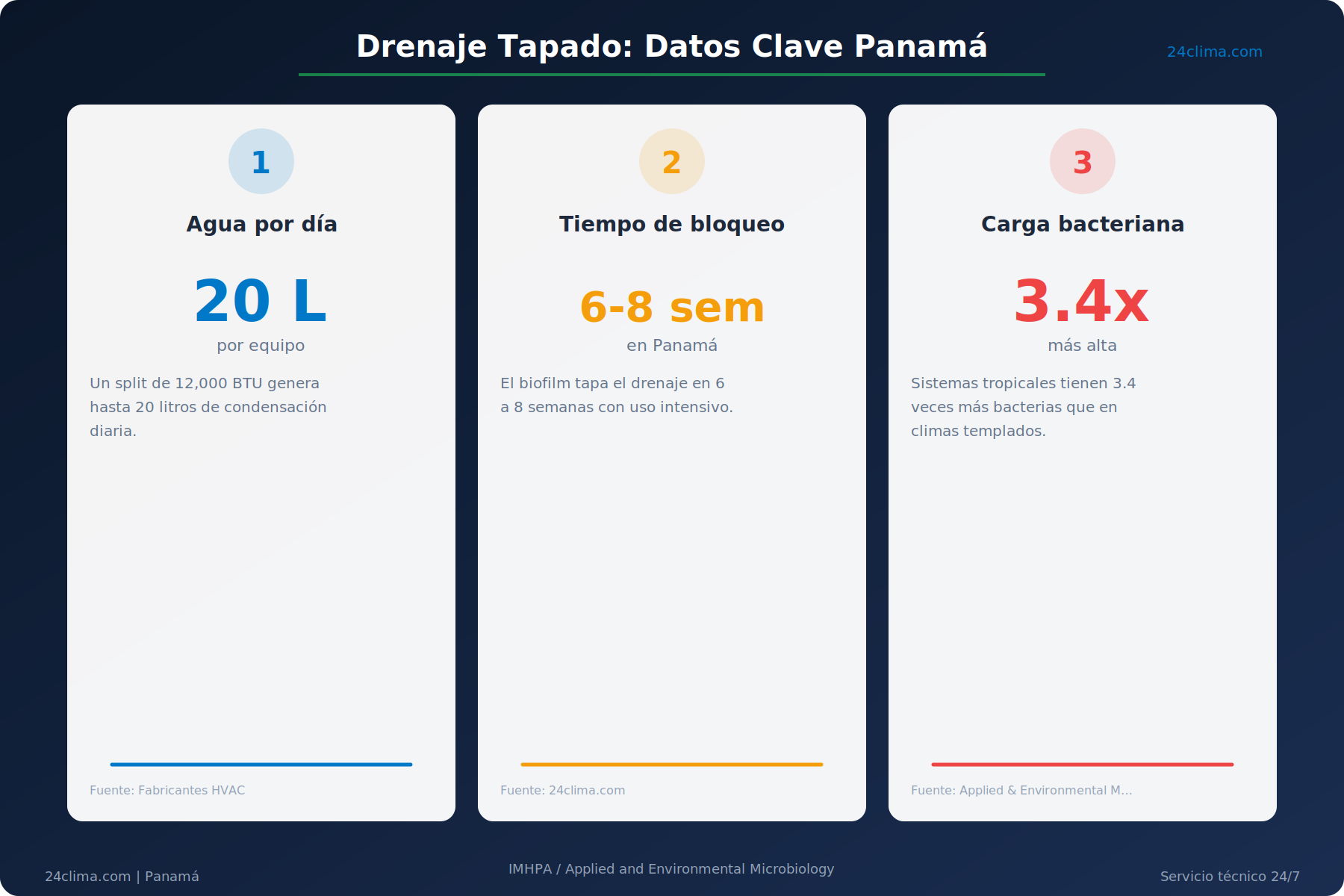
The reality is both simpler and more frustrating. A standard 12,000 BTU split system in Panama can produce up to 20 liters of condensation water per day during the most humid months. That water has to go somewhere — and that somewhere is the drain line. When it clogs, the water has no exit and overflows back into the unit, spilling onto your floor, your wall, or your ceiling.
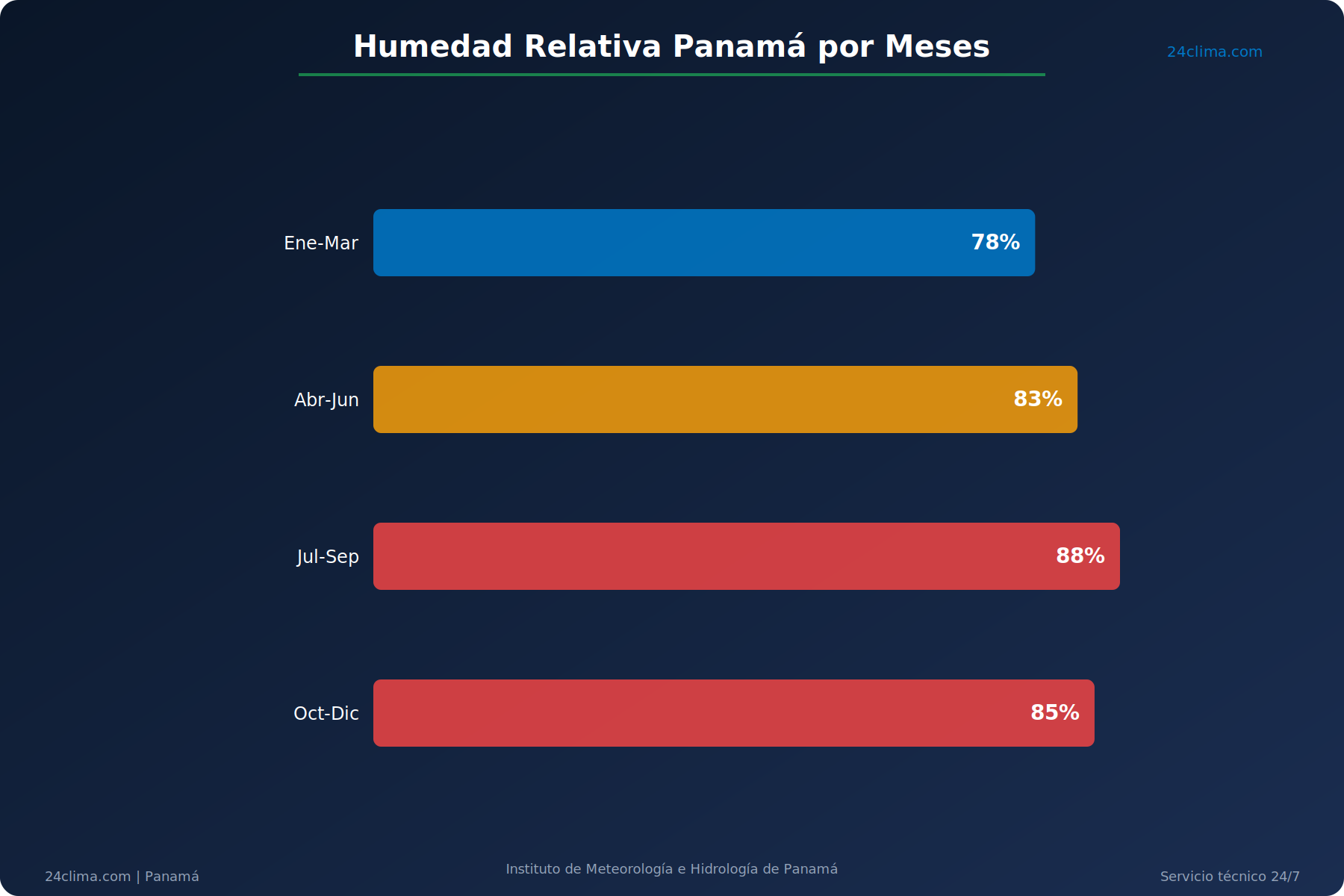
The clog doesn't appear out of nowhere. Panama's tropical climate creates ideal conditions for mold, bacteria, and a sticky organic substance called biofilm — a layer of living slime that coats the inner walls of the drain tube. In dry climates, that buildup takes six months or more to become a problem. Here, with average humidity hovering around 85% for much of the year, a heavily-used unit can develop a full clog in as little as six to eight weeks.
Why Panama's Climate Is Especially Hard on Drain Lines
The drain line is the final destination for all the moisture your AC pulls out of the indoor air. The evaporator coil inside the indoor unit cools the warm, humid air passing over it, causing condensation — the same effect you see on a cold water bottle on a hot day. In Panama, that process never really stops.
According to data from Panama's Instituto de Meteorología e Hidrología, average relative humidity in Panama City exceeds 80% for nine to ten months of the year. That means the evaporator is in continuous condensation mode — and the drain line is continuously carrying water loaded with organic particles, filtered dust, mold spores, and airborne bacteria.
The biofilm that builds up inside the drain tube isn't just dirt. It's an active colony of microorganisms that thrives in constant moisture at temperatures between 77°F and 95°F — exactly the conditions inside an AC drain system here. A study published in Applied and Environmental Microbiology found that HVAC drain systems in tropical climates carry bacterial loads up to 3.4 times higher than equivalent systems in temperate climates.
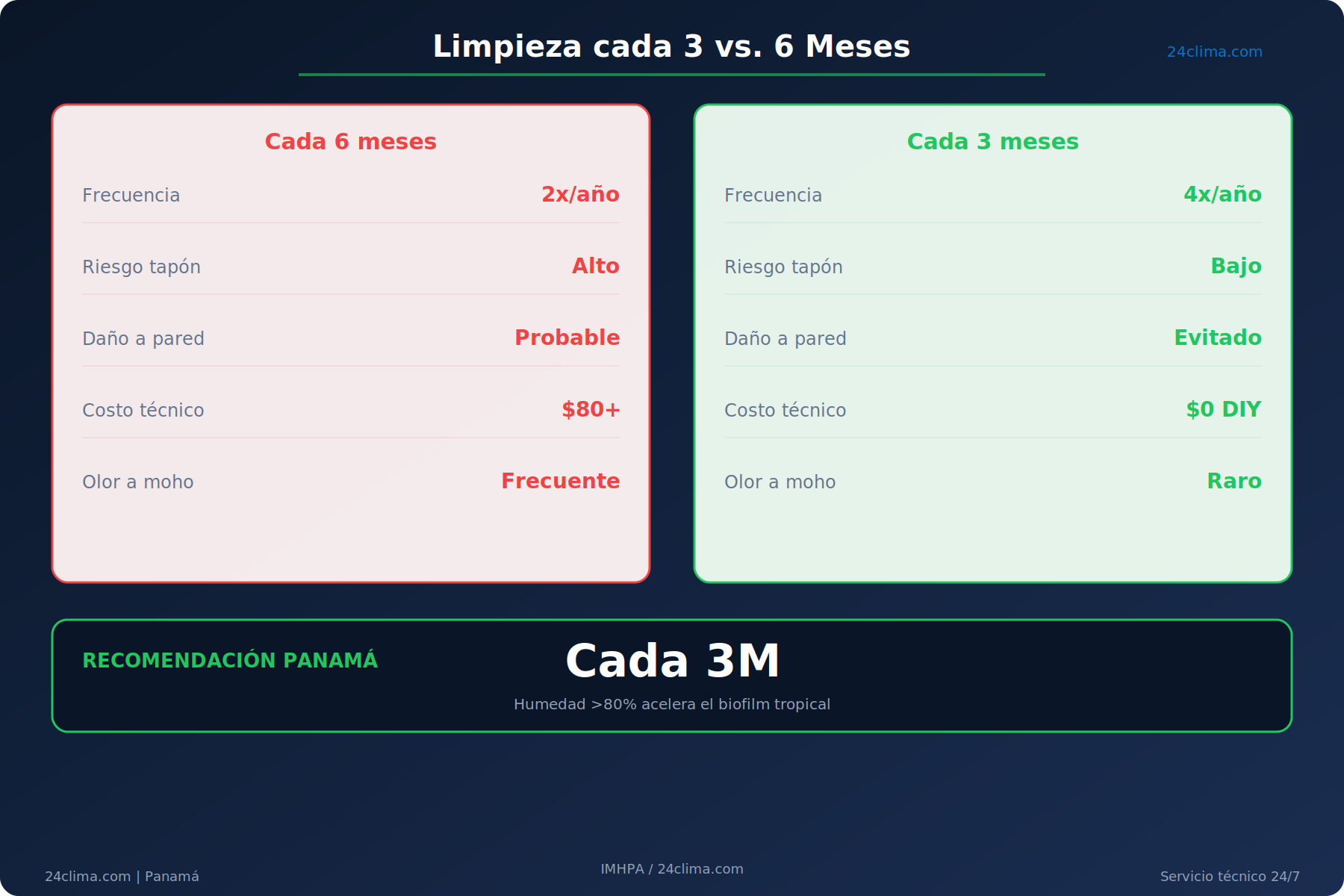
The practical takeaway: whether you live in San Francisco, Marbella, Albrook, or anywhere else in Panama City, you need to clean your drain line every three months — not every six months, as recommended by manuals written for US or European climates.
Symptoms, Causes, and Solutions — Quick Diagnostic Table
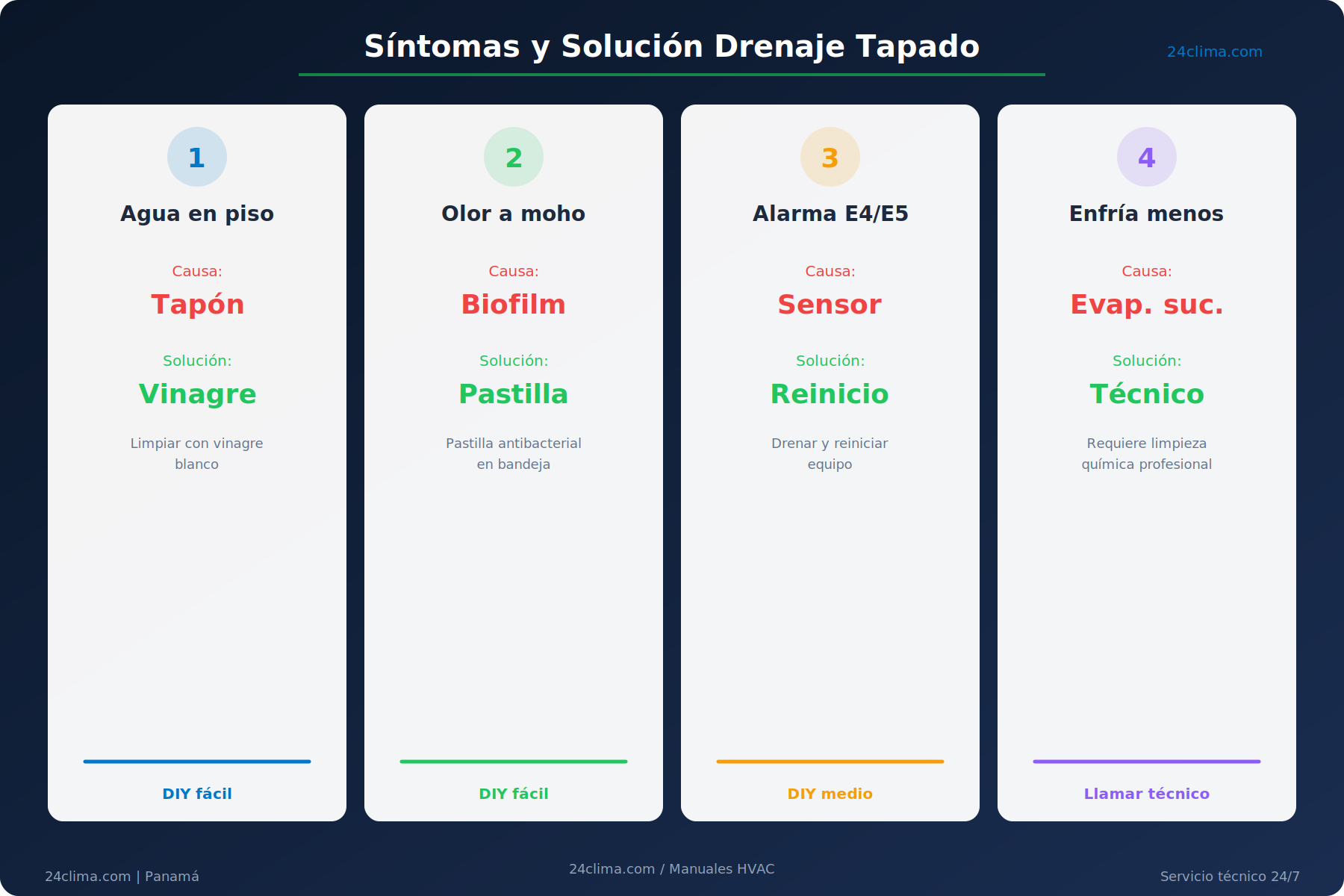
Before you grab anything and start poking around, figure out exactly what your system is telling you. Below are the most common signs of a blocked drain, along with the cause and the right response.
Water dripping from the indoor unit onto the floor or wall: the drain is partially or fully blocked and the condensation pan has overflowed. Clean the drain line with white vinegar or drain tablets, and check the condensation pan's tilt angle.
Musty or moldy smell when the AC is running: active biofilm in the drain line or condensation pan, possibly mold on the evaporator coil. Clean the drain, clean the filters, and drop an antibacterial tablet in the condensation pan.
E4 or E5 error code on the remote or unit display: the overflow sensor triggered — the system detected water in the pan and shut itself down to prevent damage. Turn off the unit, manually remove the accumulated water, clean the drain, then reset the system.
AC cooling less effectively even though the filter is clean: the evaporator coil may be partially blocked by buildup connected to a saturated drain system. Get a professional inspection — this may require chemical cleaning of the evaporator coil.
Yellow or brown stains on the wall around the indoor unit: chronic overflow that has already soaked into the surface, meaning the clog has been there for weeks or months. Clean the drain urgently and assess the wall damage.
How to Clean the Drain Line Yourself — Step by Step
Most residential drain clogs in Panama can be cleared without any special tools. You need white vinegar (the most effective option for dissolving biofilm), a bulb syringe or suction pump, warm water, and a small flashlight. If you prefer a ready-made option, drain cleaning tablets for AC systems are widely available at electrical supply stores along Vía España or at Albrook Mall — they work well as ongoing prevention.
Step 1: Turn off the unit completely. Not just with the remote — go to the breaker and cut power to that specific unit. You'll be working near water and you don't want live current anywhere close.
Step 2: Locate the condensation pan. In a standard wall-mounted split, it sits beneath the evaporator coil inside the indoor unit casing. Many units let you access it by removing the front panel. If there's standing water in the pan, soak it up with a sponge or cloth before continuing.
Step 3: Find the drain line. It exits the indoor unit and typically ends outside the apartment or house — at balcony floor level or at a floor drain. Trace the tube from the unit to its exit point so you know the full path.
Step 4: Pour white vinegar into the condensation pan. Add 200 to 300 ml directly into the pan where water collects. Let it sit for 20 to 30 minutes. The acetic acid in vinegar breaks down biofilm without damaging the plastic or copper components inside the system.
Step 5: Check the flow at the exterior outlet. After the soak, use your bulb syringe or a water bottle to push clean water through the pan and into the drain tube. Watch the exterior end — water should flow out freely. If it drains slowly or not at all, the clog is more compacted.
Step 6: For stubborn clogs, apply suction from the exterior end of the tube. Press the bulb syringe firmly against the drain outlet and pull with three or four strong suction strokes. A solid slime clog will often break free in one attempt. Reapply vinegar and check the flow again.
Step 7: Wipe out the pan with warm water and a cloth. Remove any visible organic residue. If you're using maintenance tablets, place one in the pan after cleaning — they dissolve gradually with condensation water and keep the drain clear for 30 to 90 days depending on the brand.
Step 8: Restore power and turn the unit back on. Watch for 10 to 15 minutes to confirm the dripping has stopped. If the system had an E4 or E5 error active, you may need a manual reset depending on the model — check your manual or search the model number on YouTube for the specific reset procedure.
How Often to Clean the Drain Line in Panama
In dry climates like Arizona, Texas, or most of Spain, technical manuals recommend cleaning the AC drain line every six months. In Panama, that schedule isn't enough — and it leads directly to the problem we've been describing.
Clean it every three months. If your unit runs more than ten hours a day — completely normal in apartments in Costa del Este, Punta Pacífica, or Marbella, where the heat often doesn't ease up until 11 at night — consider cleaning it every two months during the dry season, from December through April, when the system works hardest.
Here's a practical maintenance calendar built around the Panamanian year:
January: full cleaning (filters plus drain line) — start of peak dry season. April: drain line cleaning — end of dry season, before the rainy season transition. July: full cleaning — midpoint of rainy season, highest humidity load of the year. October: drain line cleaning — preparing for the year-end stretch.
Four cleanings per year, combined with monthly filter changes, keeps the system running efficiently and cuts the risk of water damage to essentially zero. According to data from Daikin and Mitsubishi, equipment with regular drain maintenance retains its original energy efficiency up to 15% longer than equipment with a neglected drain — which in Panama translates to $15 to $25 less on your electricity bill every month.
For more guidance on keeping your system in top shape year-round, visit our guides and tips section at https://24clima.com/consejos-y-guias/.
Quarterly Maintenance Checklist — Adapted for Panama's Climate
Run through this every three months:
Filters: remove, rinse with cold water, dry in the shade, reinstall. If torn or warped, replace them. Condensation pan: check for standing water or visible slime buildup. Wipe clean with a damp cloth. Drain line: apply white vinegar, verify free flow at the exterior outlet. Indoor unit vents and grille: wipe down with a dry cloth to remove accumulated dust. Outdoor unit: check that no leaves, branches, or debris are blocking airflow around the condenser. Smell check: run the unit and confirm there's no musty odor in the first five minutes of operation. Sound check: listen for gurgling, intermittent clicking, or unusual vibration — all possible signs of a partially blocked drain. Maintenance tablet: place one cleaning tablet in the condensation pan after each quarterly cleaning.
If during this process you find visible mold on the evaporator coil, deteriorated insulation on the copper lines, or the dripping continues after cleaning, call a technician. Not because the problem is impossible to solve, but because those situations require partial disassembly of the unit that goes beyond basic homeowner maintenance.
Common Questions — From Real Panama Homeowners
Why is my air conditioner leaking water in Panama?
The most common cause is a drain line blocked by biofilm. With average humidity reaching 85%, your system generates large volumes of condensation — up to 20 liters per day from a 12,000 BTU unit. When the drain tube clogs, that water overflows from the condensation pan onto your floor or wall. This is a maintenance issue, not a mechanical failure, and in most cases you can fix it yourself in under an hour.
How often should I clean the AC drain line in a tropical climate?
Every three months — twice as often as the standard schedule for temperate climates. Manufacturer manuals are written for environments where relative humidity rarely exceeds 60%. In Panama City, where humidity stays above 80% for most of the year, biofilm forms two to three times faster. Four drain cleanings per year is the minimum needed to prevent clogs and water damage.
Can I clean the AC drain line myself without calling a technician?
Yes, in most residential situations. The process requires only white vinegar, a bulb syringe, and access to the condensation pan. It takes between 30 and 60 minutes and requires no special tools or technical knowledge. The exception is when the clog is deep and suction doesn't free it, or when there's visible mold on the evaporator coil — in those cases, a professional AC cleaning service is the right call.
The Water Running Through That Clean Drain Is the Same Water That Was on Your Floor Yesterday
A blocked drain doesn't give you much warning. It starts quietly — a little slime, a small buildup — and only becomes visible once damage has already happened. In a country where the AC runs eight, ten, twelve hours a day for most of the year, that drain line is one of the most important components in the system, and one of the most overlooked.
Three months is all that separates a healthy system from a leaking one. Preventive maintenance costs you nothing compared to a water-damaged wall or an evaporator coil with mold that requires specialized chemical cleaning.
If after following this guide the dripping continues, or if you'd prefer to have a technician assess the full condition of your system — refrigerant charge, evaporator condition, overall efficiency — at 24Clima we do that with complete transparency: we tell you exactly what we found and why any work is necessary before we touch anything. No surprises. Reach us at https://24clima.com/contacto/ and you'll hear back the same day.
Last updated: May 2025. Humidity data: Instituto de Meteorología e Hidrología de Panamá. Bacterial load data: Applied and Environmental Microbiology (HVAC tropical climate study). Energy efficiency data: Daikin Technical Manual 2024, Mitsubishi Electric HVAC Maintenance Guide 2023.