That Air You Need — and the Smell Telling You Something's Wrong
It's 2 in the afternoon in San Francisco (the Panama City neighborhood, not California). The sun beats straight down on concrete, the asphalt radiates heat like an oven, and the thermometer reads 91°F with 84% humidity. You walk into your apartment, switch on the AC, close your eyes, and wait for that cool relief.
And then you smell it.
Not clean cold air. Something damp, vaguely organic — like wet laundry forgotten in a gym bag. Or worse: something burning, rotten eggs, or that strange sweet chemical you can't quite place. The unit is cooling, yes. But you're breathing something that shouldn't be there.
What Most People Do in That Moment Is Wrong
The instinct is to grab an air freshener, crack a window, or just ignore it and hope it goes away. Some people blame the building, the neighbors, or "Panama's humidity." Very few go straight to the real cause.
A bad smell from your AC is not an air quality nuisance. It's a technical symptom with specific causes — and some of those causes can genuinely affect your health. Ignoring it doesn't fix it. It makes it worse.
At 24Clima we've been servicing units across Panama City for more than 5 years, and bad smells are one of the most frequent complaints we get. That's why in our guides and tips section we've documented exactly what causes them and what to do in each case. This is that guide.
Why Panama Is the Perfect Environment for Your AC to Smell Bad
Air conditioning in Panama operates under extreme conditions. We're not talking about the dry cold of Mexico City or the arid heat of desert climates. Panama combines intense heat with persistent humidity — a combination that turns the inside of any AC unit into an active biological ecosystem.
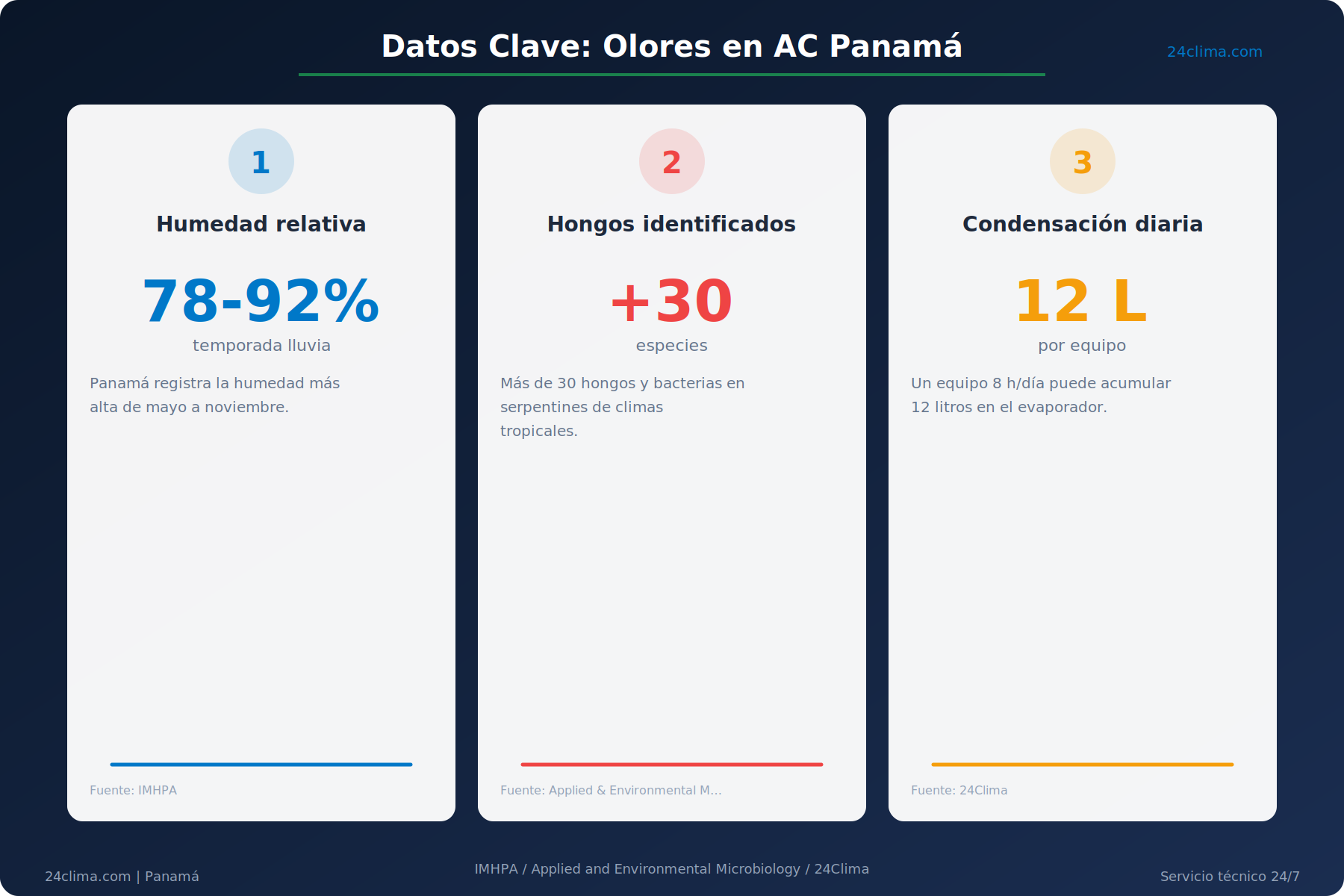
According to Panama's Instituto de Meteorología e Hidrología, average relative humidity in Panama City runs between 78% and 92% during the rainy season, May through November. During those months, every time your unit cycles on and off, the evaporator coil accumulates condensation. If the drainage system doesn't work properly, that moisture sits there. And where there's stagnant moisture in a warm, dark space, microbial life thrives.
A study published in Applied and Environmental Microbiology identified more than 30 species of fungi and bacteria recoverable from evaporator coils in tropical climates. Black mold (Cladosporium), Aspergillus, and bacteria from the Pseudomonas genus are the most common — all of them produce volatile organic compounds that you smell as "dampness," "wet dirt," or "dirty socks."
That's not poetic climate commentary. It's biochemistry you can smell.
The 5 Most Common Smells — What They Mean and What to Do
Each smell a malfunctioning AC produces has a distinct chemical signature. Correctly identifying yours is the first step to fixing the right problem.
Musty or Moldy Smell — The Most Common in Panama
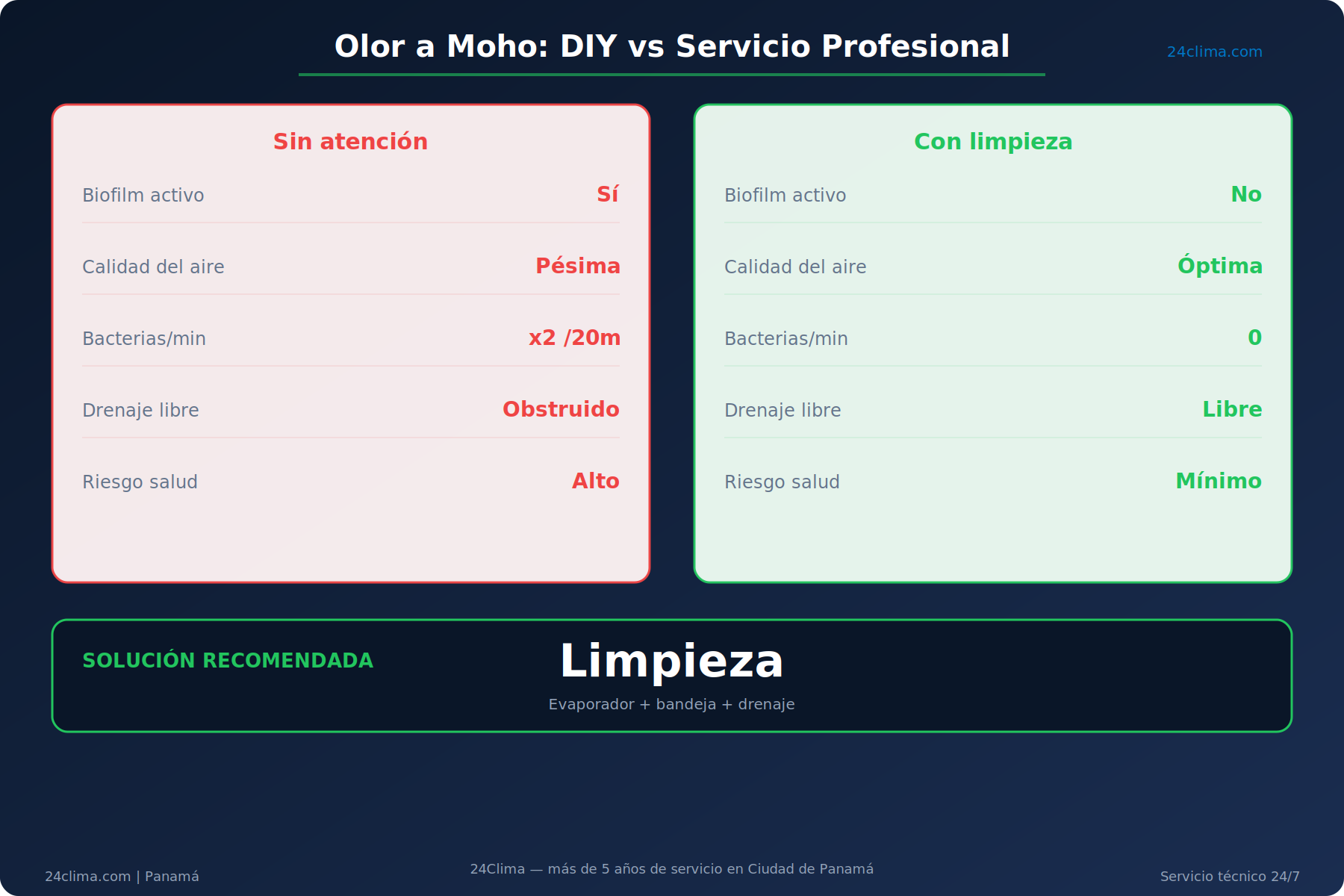
The direct cause is biofilm buildup on the evaporator coil and drain pan. Biofilm is an organized bacterial colony that adheres to moist surfaces and produces sulfurous and acidic compounds that smell exactly like damp laundry or a musty basement.
Why does it happen here? During the rainy season, a unit running 8 hours a day can accumulate up to 12 liters of condensation on the evaporator. If the drain line is even partially blocked — common from dust, algae, or filter lint — that water pools in the pan. At 77°F with constant humidity, bacterial colonies double every 20 minutes.
If the unit hasn't been cleaned in the past 6 months, try this before calling anyone. Turn it off and unplug it from the outlet. Remove and wash the filter with water and mild soap, then let it dry completely. Find the drain line where it exits through the exterior wall and confirm water flows freely. Fill a spray bottle with a 3:1 mixture of warm water and white vinegar, apply it to the accessible evaporator surface, and let it sit 15 minutes. Then run the unit in fan-only mode for 20 minutes before switching back to cooling.
If the smell comes back, the biofilm has colonized internal sections of the coil that you can't reach without disassembling the unit. That's when you call a technician.
Burning or Hot Plastic Smell
The direct cause is an overheating electrical component — the fan motor, capacitor, drain heater, or wiring that's deteriorated from humidity or rodent damage.
This is the most urgent smell on this list. Turn the unit off immediately from the circuit breaker, not just the remote. Don't turn it back on until a technician has inspected it. If the burning smell is strong or you see smoke, disconnect at the electrical panel.
In Panama, voltage fluctuations hit hardest in areas with older infrastructure — Curundú, Santa Ana, parts of El Chorrillo. Those fluctuations chew through capacitors and motors faster than anywhere else. "It smelled like burning but I ignored it" is one of the most common stories we hear before an HVAC-related electrical fire.
Rotten Egg or Sulfur Smell
This one points to gas. Either refrigerant with tracer additives, or — more concerning — a cooking gas leak the unit is drawing in and redistributing through the room.
Modern refrigerants like R-410A and R-32 are odorless on their own, but many technicians add sulfur-scented tracers to help locate leaks. If you're smelling sulfur, you may have an active refrigerant leak with those tracers present. It's also possible your unit sits near a gas line or in a building with structural gas leaks, and the return air intake is pulling that gas indoors.
Ventilate the space, turn the unit off, and call a technician before switching it back on. A refrigerant leak doesn't just hurt performance — R-410A carries a global warming potential 2,088 times greater than CO2, according to the EPA.
Sweet or Fruity Smell — The One Nobody Recognizes
The cause is a refrigerant leak, specifically R-22 or R-410A at low concentrations. Some people describe it as "ether," "something chemical but not unpleasant," even "artificial mint."
This smell is subtler than sulfur, which is exactly why it goes unnoticed for weeks while the unit loses charge and cools progressively worse. Based on service data from Panama, an undetected refrigerant leak drops equipment efficiency by 20% to 40% — which translates to electricity bills running $15 to $30 higher per month before the unit eventually stops cooling altogether.
A technician needs to check the refrigerant charge with gauges and find the leak before recharging. Recharging without sealing the leak first is money straight down the drain.
Dirty Socks Syndrome — That Locker Room Smell
This one has a formal technical name in the HVAC industry because it's common enough that engineers had to classify it. Dirty Socks Syndrome occurs when specific bacteria from the Brevundimonas and Sphingomonas genera colonize the evaporator coil during periods of non-use or intermittent operation.
In Panama, this hits beach apartments and second homes hardest — units that sit closed for weeks at a time. The unit starts up, the bacteria activate with the motor's heat, and the smell reaches you before the cold air does.
The fix requires professional cleaning with bactericidal agents approved for HVAC use: a quaternary-based disinfectant applied directly to the coil and drain pan. No amount of vinegar handles this one.

DIY vs. Professional Service — When Is Each Right
The general rule is simple: if the smell has been around for less than 2 weeks, the filter is dirty, and the drain flows freely, a basic DIY clean may take care of it. If the smell comes back, is intense, or matches the burning, sulfur, or sweet-chemical descriptions above, you need a technician.
Current service costs in Panama (2024–2025 market data):
Basic filter cleaning (DIY): $0, about 30 minutes of your time. Drain clearing with a manual blower: $0 for your time, plus $8–12 for the tool at any hardware store. Professional deep cleaning — coil, drain pan, and drain line: $35 to $55 per unit. Deep cleaning with bactericidal treatment and duct disinfection: $55 to $65 per unit. Refrigerant recharge plus leak repair: $60 to $120 depending on refrigerant type.
A professional deep clean means partial disassembly, washing the coil with specialized cleaning foam, blowing out and disinfecting the drainage system, and applying an antimicrobial product. That's the procedure that actually eliminates the biofilm rather than covering it up. To understand exactly what that process involves, check out our professional AC cleaning service page where we detail every step.
How Often Should You Do Preventive Maintenance to Avoid These Smells?
In Panama, standard maintenance intervals from drier climates don't apply. Persistent humidity combined with heavy dust loads in urban zones like El Dorado, Albrook, and Costa del Este means things get dirty faster.
Clean filters every 3–4 weeks during the rainy season, every 6 weeks during dry season. Give the drain pan a visual check each month and a full cleaning every 2 months. Schedule a deep coil cleaning every 6 months minimum for any unit in daily use. If your unit sits in a coastal zone — Punta Pacífica, Balboa, Amador — bump that to every 4–5 months, because salt air accelerates both corrosion and biofilm growth at a pace that surprises people.
Consistent preventive maintenance extends equipment lifespan by 3 to 5 years according to ASHRAE, and cuts electricity consumption by 15% to 25% compared to a dirty unit grinding away without service.

Frequently Asked Questions About AC Odors
Why does my air conditioner smell musty or moldy in Panama?
The primary cause is bacterial biofilm and mold building up on the evaporator coil and condensate pan. In Panama, where relative humidity exceeds 80% for six months of the year, this process happens faster than in temperate climates. The coil stays damp almost continuously, and without a cleaning every 4–6 months, mold colonies grow until they produce that characteristic damp or wet-earth smell coming out with the cold air.
Is the bad smell from my air conditioner dangerous?
It depends on what you're smelling. A musty or moldy odor means spores and volatile organic compounds are circulating through your space — that aggravates asthma, rhinitis, and respiratory allergies, especially in children and older adults. A burning smell signals electrical risk and means turning the unit off immediately. A sulfur smell may indicate a gas leak and demands ventilation plus urgent inspection. No unusual smell should be ignored.
How often should I clean the drain to prevent bad smells?
In Panama, clean the drain system every 2 months during the rainy season (May through November) and every 3 months during dry season. A partially blocked drain is the second most common cause of bad smells, right behind evaporator coil biofilm. Confirm the drain line flows freely, clean the pan with water and vinegar, and check that the exterior drain exit has no algae or lint buildup.
The Cool Air You Deserve to Breathe Clean
Back to San Francisco. Two in the afternoon, 91°F, 84% humidity. You walk in, turn on the unit. And this time the air that comes out smells like nothing — exactly what cold air should smell like: the complete absence of odor.
That doesn't happen by accident. It's the result of a clean unit, a functioning drain, and maintenance done on schedule.
At 24Clima we diagnose where the smell is coming from, eliminate the cause, and get your equipment working the way it should in the climate we actually have — not the one we wish we had. If your unit smells off or you haven't had maintenance in more than 6 months, contact us on WhatsApp at 24clima.com/contacto/ and we'll schedule a technical visit.
Last updated: May 2025